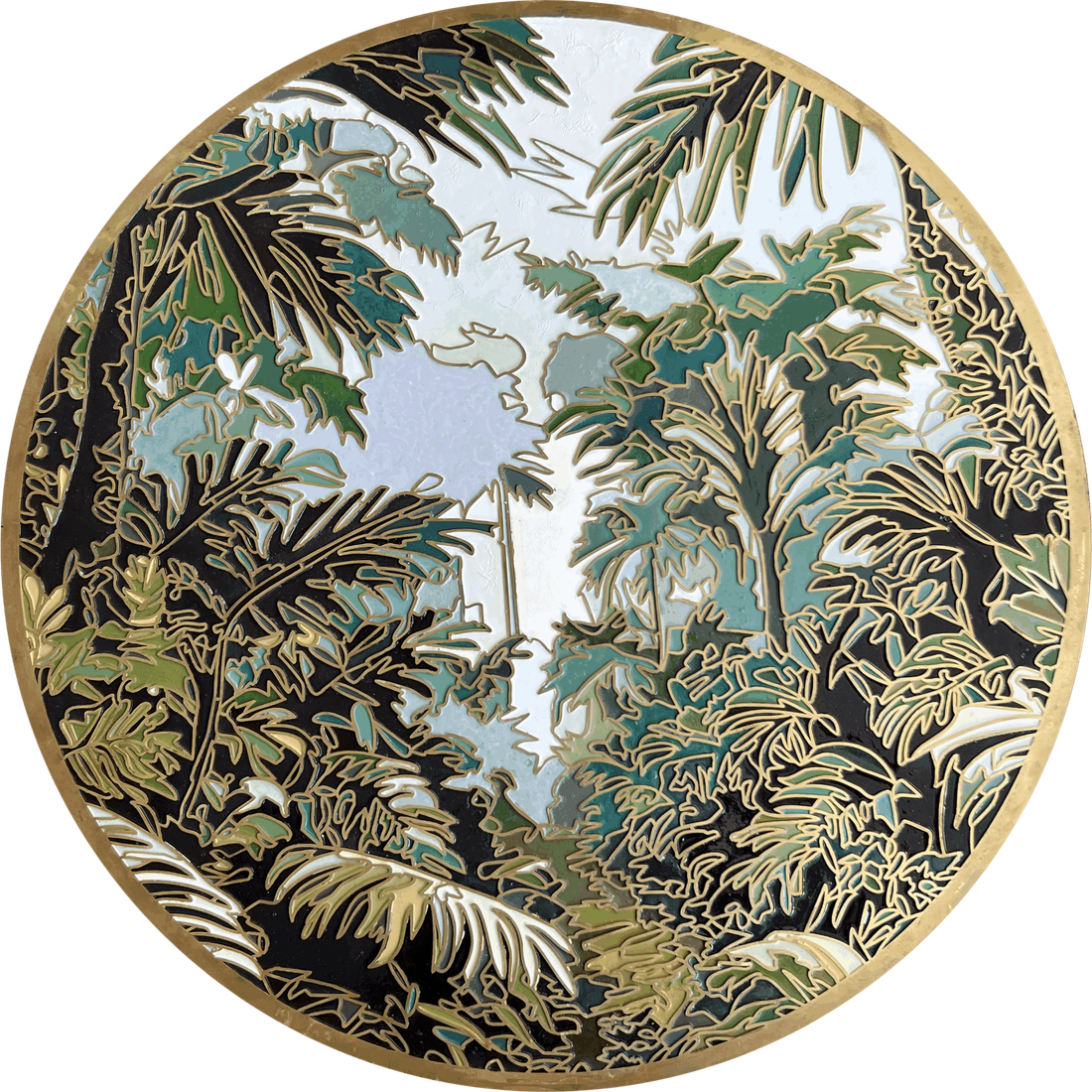
Gilded Vines I
2026 · brass & enamel on wood · Ø 60 cm
Gilded Vines I
2026 · brass & enamel on wood · Ø 60 cm
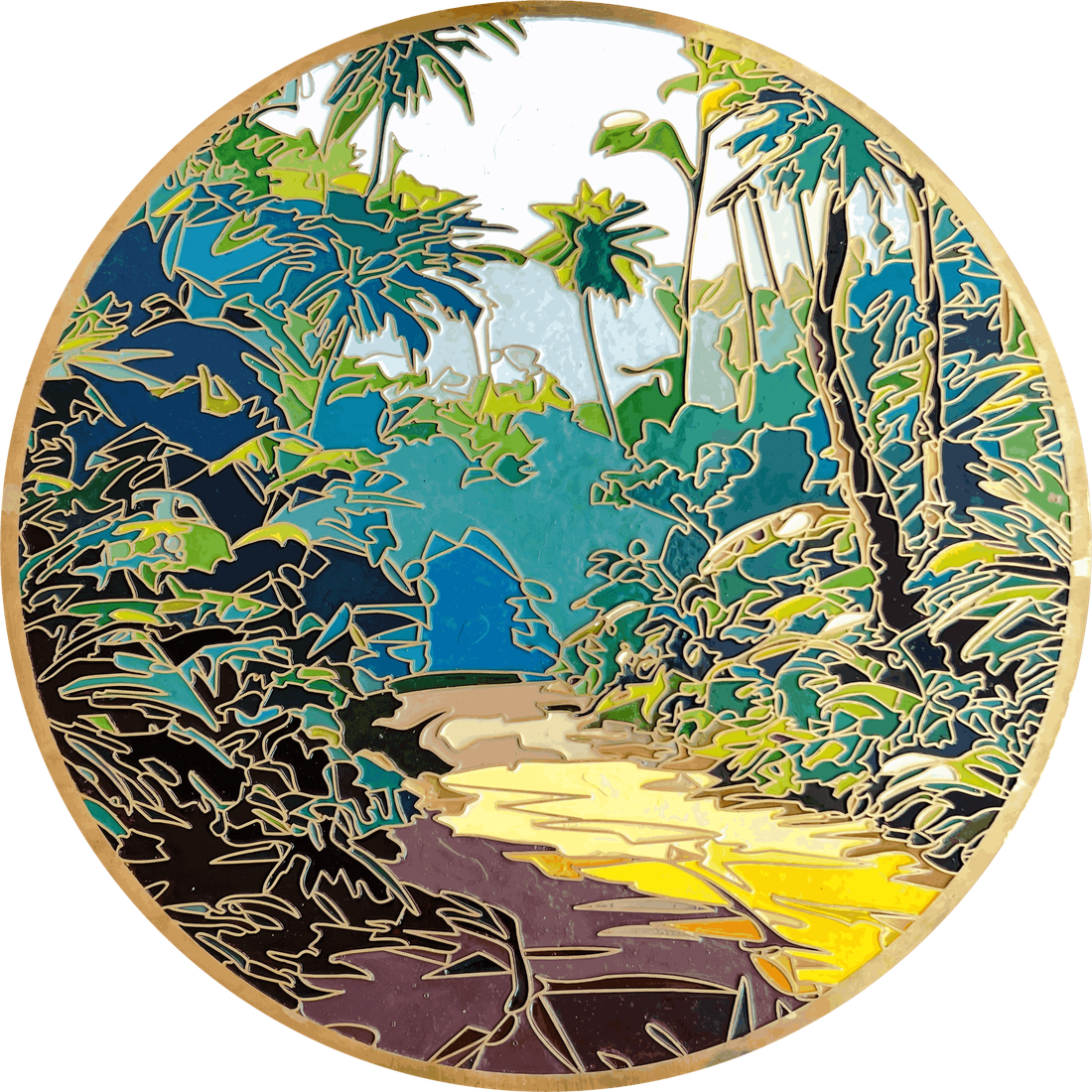
Gilded Vines II
2026 · brass & enamel on wood · Ø 60 cm
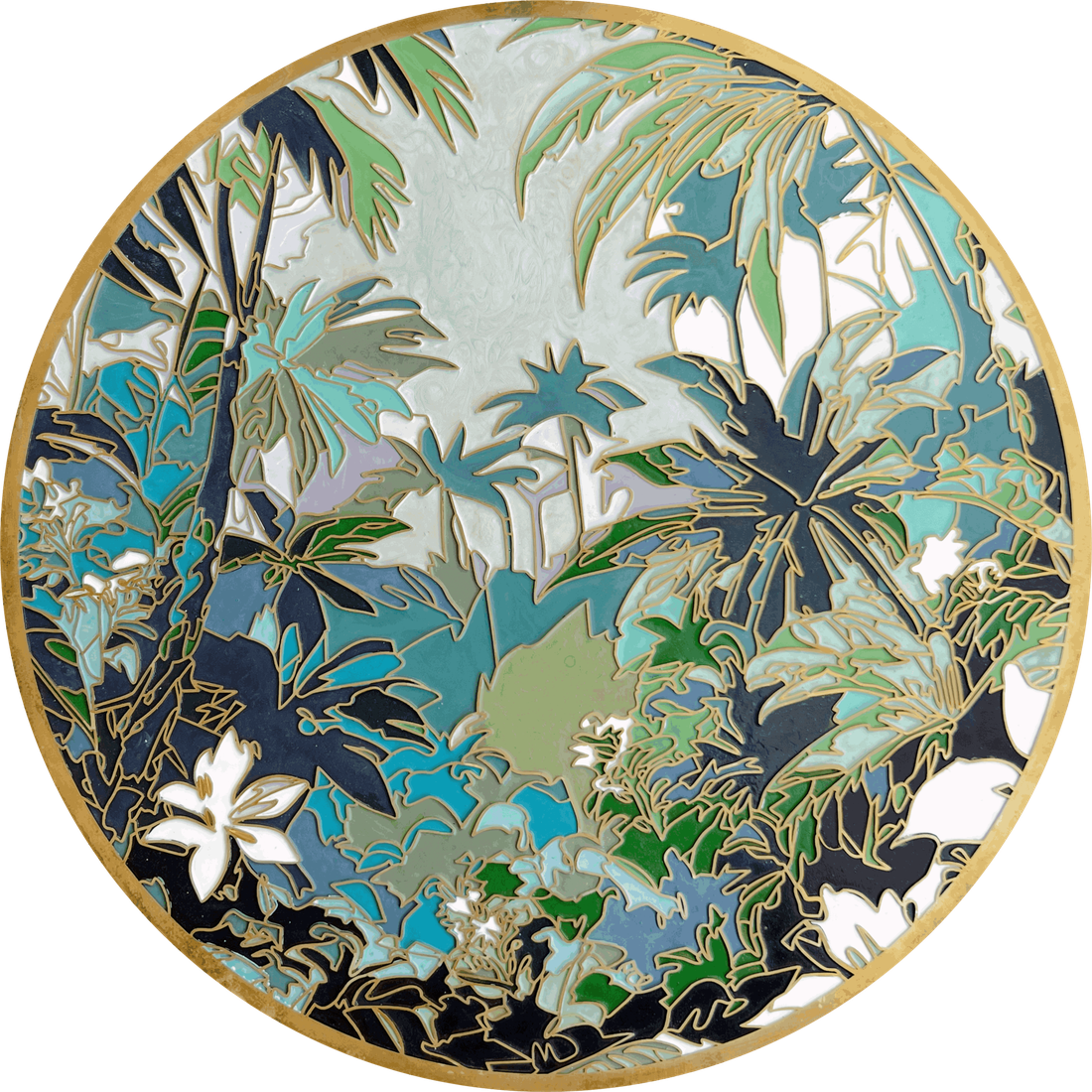
Gilded Vines III
2026 · brass & enamel on wood · Ø 60 cm
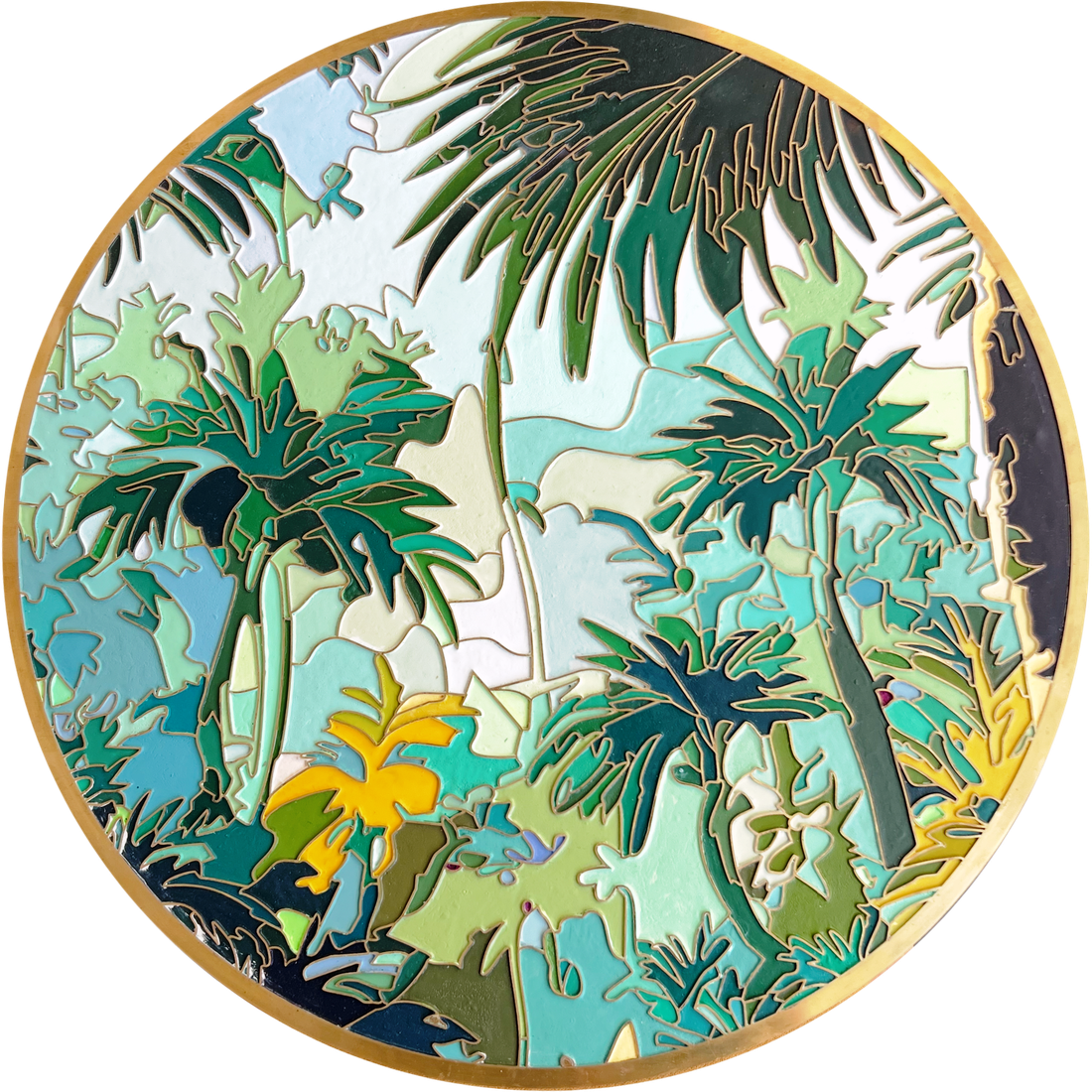
Gilded Vines IV
2026 · brass, acrylic on wood · Ø 60 cm

Gilded Vines V
2026 · brass & enamel on wood · Ø 48 cm
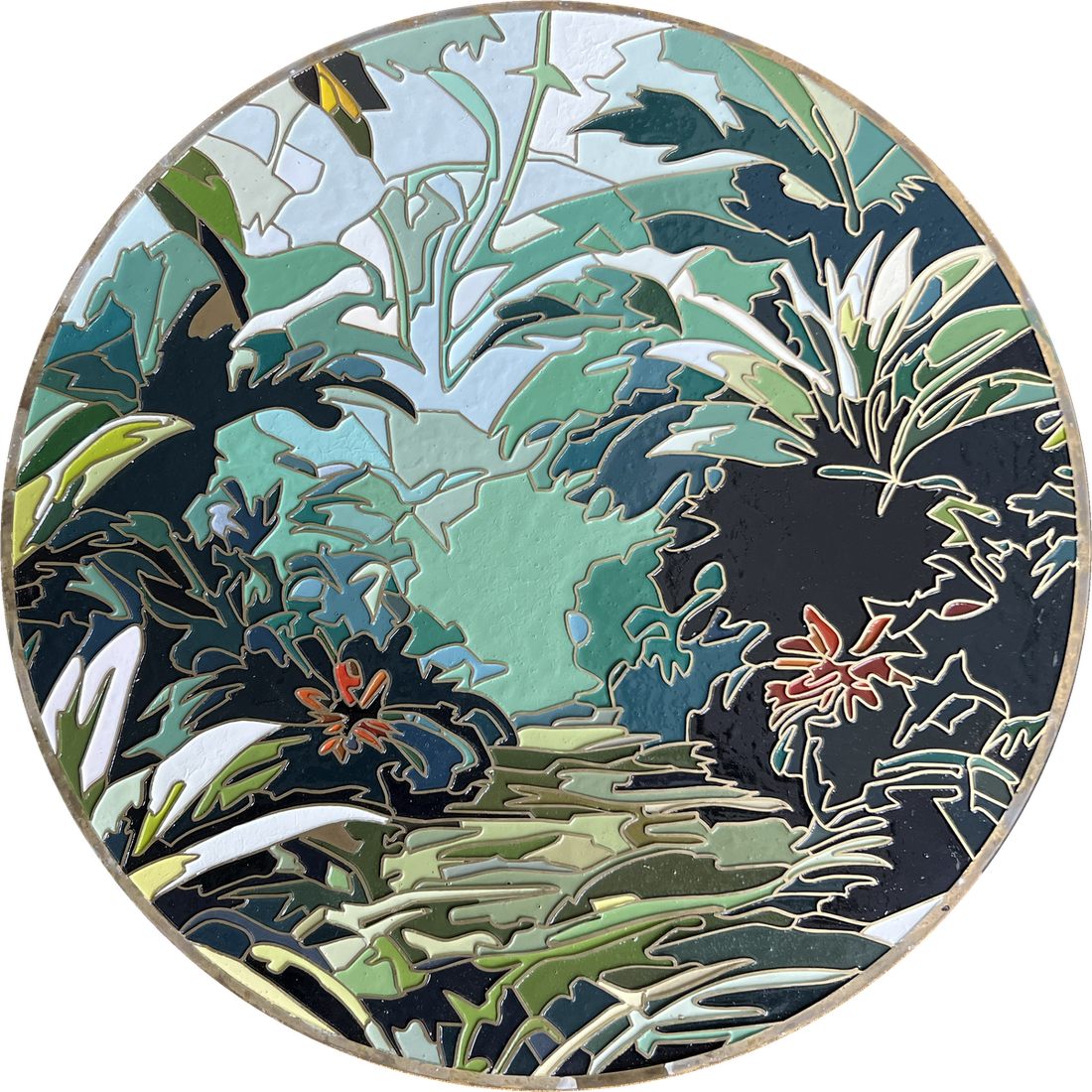
Gilded Vines VI
2026 · brass & enamel on wood · Ø 48 cm
Marc Lebreton's Gilded Vines press the Mata Atlântica into the disc of a tondo and bind it in brass, so each panel reads at once as a window and a reliquary. The metal contours — nearer to cloisonné or leaded glass than to drawing — partition the rainforest into a lattice of cells, each filled by hand until the foliage glows like enamel. It is an unashamedly decorative language, and Lebreton makes it carry weight: ornament becomes a way of holding a threatened forest still, of fixing its density and light without quite freezing them. The circular frame does the rest, turning the canopy into something glimpsed through a lens — or remembered through one.
In The Gilded Vines, Marc Lebreton achieves a mesmerizing tension between the organic chaos of the Atlantic Forest and the rigorous discipline of craftsmanship. Utilizing a cloisonné technique — where hand-poured enamel and pigment are bound by fluid brass contours — the compositions oscillate between the sacred luminosity of gothic stained glass and the elegant, stylized flat planes of Art Nouveau. The tondo format works beautifully here, transforming each piece into a lens or a historical medallion. In works like Gilded Vines II and VI, paths of shifting yellow and ochre pigments slice through the dense, fractured greens, pulling the viewer into the depths of the canopy. Lebreton's handling of light is exceptional; the stark white flora in Gilded Vines V pop brilliantly against deep, shadowy forest floors, perfectly capturing the concept of "fragmented consciousness." It is a striking exploration of memory, where nature is meticulously reconstructed, cell by radiant cell.
In The Gilded Vines, Marc Lebreton turns the Atlantic Forest into luminous, self-contained worlds. Each tondo reads like a specimen under glass: brass contours act as both drawing and armature, holding pools of enamel and pigment that catch light with the clarity of cloisonné. The circular format refuses a horizon line. Instead, fronds, vines, and filtered sky are pressed into compressed, kaleidoscopic fields that feel remembered rather than observed.
Colour does the narrative work. Deep jades and indigoes anchor the series, while bursts of sunlit ochre, aqua, and ivory lily-white punctuate the density. The brass lines keep the compositions taut, echoing Byzantine icons and Art Nouveau's organic metalwork, yet the palette and foliage are unmistakably tropical. The effect is devotional and slightly hallucinatory, fitting Lebreton's notion of "fragmented consciousness." These are not landscapes so much as relics of looking: precise, ornamental, and charged with a quiet urgency about what we choose to forget and remember.
Lebreton's The Gilded Vines transforms fragments of the Atlantic Forest into self-contained worlds. The circular format recalls both the Renaissance tondo and the botanical specimen, compressing dense vegetation into meditative fields where depth is built through overlapping brass contours and translucent enamel rather than painterly gesture. The cloisonné-like construction gives each image an unusual duality: the metallic armature imposes order while luminous greens, ochres and blues suggest an ecosystem in constant flux. These are not panoramic landscapes but acts of close attention, oscillating between observation and memory. Their decorative precision never lapses into illustration; instead, the surfaces hold a quiet tension between permanence and fragility, inviting the eye to wander through forests that feel simultaneously remembered, reconstructed and just beyond reach.